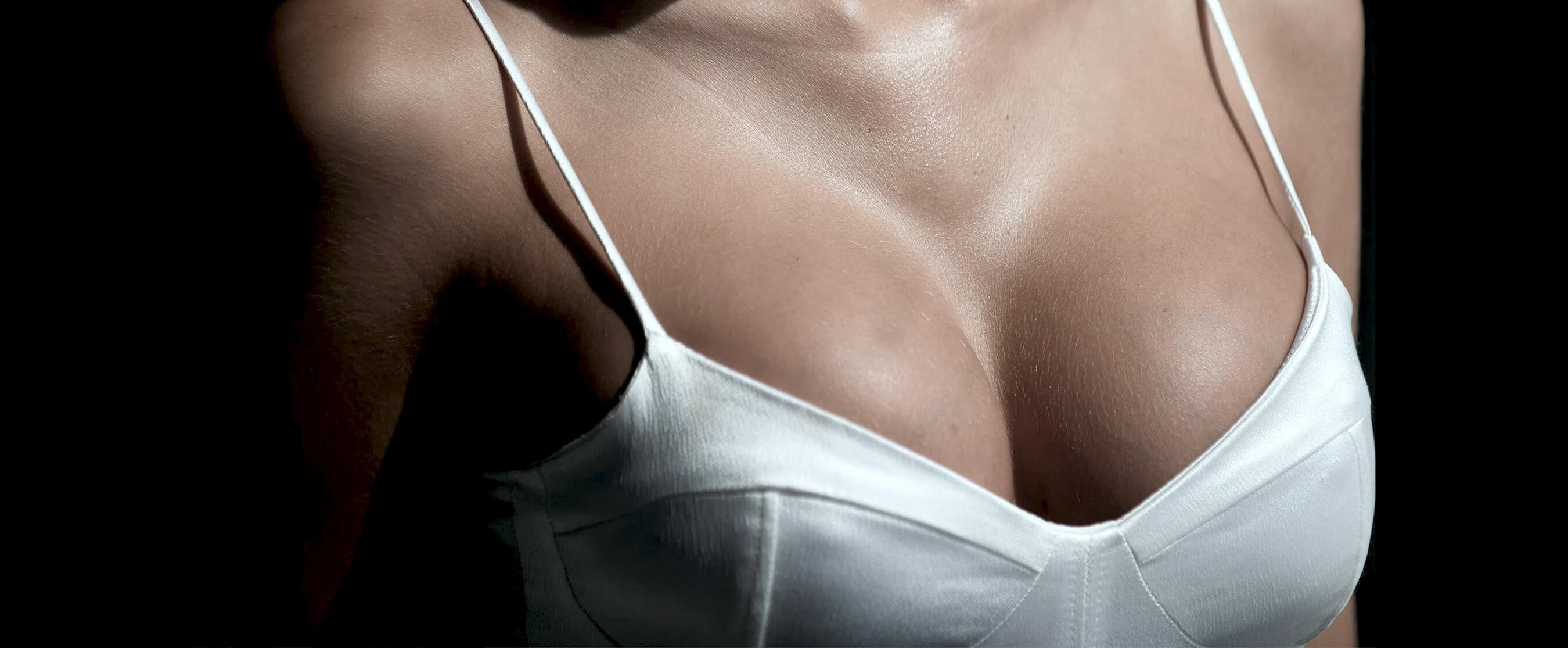
Breast Augmentation

Breast augmentation uses implants to increase breast volume, restore fullness or improve proportion. Planning is individual: implant dimensions, profile, pocket position and the existing breast envelope are considered together rather than choosing size in isolation.

Breast Augmentation

/ Benefits

Benefits of Breast Augmentation

  • Restores or adds volume: Can increase fullness after naturally small breasts, pregnancy or weight change.
  • Improves proportion: Implant dimensions can be selected to suit the chest and overall frame.
  • Customisable planning: Shape, size, projection and implant position are tailored to individual anatomy.

/ At a glance

Breast Augmentation at a glance

Surgery duration1 - 2 hours
Result lastsLong-term; implants require ongoing monitoring and may need future surgery
Follow-upIncluded
Hospital stayDay case or 1 night
Drive7 - 10 days
Shower2 - 3 days
Sport4 - 6 weeks
Sexual activity2 - 3 weeks

/ Patient voice

What patients say.

All reviews
From the first consultation, I felt listened to rather than sold to. Everything was explained clearly, including what surgery could and couldn’t achieve. The result feels completely natural — I still look like myself, just more rested.
DIANAGOOGLE JAN 12, 2026
I was nervous about having surgery, but the whole process felt calm and very well organised. The team were reassuring without ever being dismissive, and the follow-up care was excellent.
HELENEGOOGLE DEC 10, 2025
What mattered most to me was that the result didn’t look ‘done’. The change is subtle, balanced and exactly what I hoped for.
MAXIMEGOOGLE NOV 24, 2025

/ How it works

How does Breast Augmentation work

  • Plans around your anatomy: Breast width, soft-tissue coverage, skin quality and chest proportions guide implant selection.
  • Creates volume with an implant: A silicone implant is placed through a carefully planned incision, usually in the breast fold.
  • Balances shape and projection: Implant profile and position are chosen to complement the breast rather than simply maximise volume.
  • Can be combined: Where significant droop is present, augmentation may be combined with a breast lift.

/ Patient journey

Patient journey

01Step

Consultation

1. Understanding Your Goals

  • Your priorities: The consultation starts with what you would like to change, what matters most to you and what you hope surgery will achieve.

2. Clinical Assessment

  • Clinical assessment: Dr Mercer assesses anatomy, tissue quality, asymmetry, scars and any factors that may affect the operation or healing.

3. Options, Limits & Planning

  • Options and limits: Suitable surgical options, likely scars, trade-offs and realistic outcomes are discussed rather than assuming that surgery is the right answer.
  • Planning: If you choose to proceed, clinical photography, measurements and a personalised operative plan are completed before a surgery date is confirmed.

02Step

Planning

4–6 weeks before

  • Nicotine: Stop smoking, vaping and nicotine products for the period advised by your surgical team.
  • Health review: Complete requested blood tests, imaging or medical clearance and provide a full medication history.

2 weeks before

  • Medication check: Only stop medicines or supplements if specifically instructed by your surgeon or anaesthetist.
  • Support at home: Arrange transport and help for the first 24–48 hours.

Day before surgery

  • Practical preparation: Follow fasting instructions and prepare loose, front-fastening clothing and your postoperative support bra.
03Step

Surgery day

Anaesthesia

  • General anaesthetic: Breast augmentation is usually performed under general anaesthesia with a consultant anaesthetist.

Implant placement

  • Incision: The incision is commonly placed in the inframammary fold.
  • Pocket: The implant may be placed above or partly beneath the pectoral muscle depending on anatomy and tissue coverage.
  • Closure: Incisions are closed in layers and covered with dressings; a support bra is usually fitted.
04Step

Recovery

Days 1–7

  • Expected: Tightness, swelling and bruising are common; arm movement may feel restricted.

Weeks 2–3

  • Daily life: Many patients return to non-physical work as comfort and mobility improve.

Weeks 4–6

  • Exercise: Exercise is reintroduced progressively once healing is satisfactory.

3–6 months

  • Settling: Implants gradually settle and the breast shape becomes softer and more natural.
05Step

Aftercare

First week

  • Support bra: Wear the recommended bra and keep dressings clean and dry.
  • Movement: Walk gently each day but avoid pushing, pulling and lifting.

Weeks 2–6

  • Activity: Increase everyday activity gradually while avoiding heavy upper-body exercise.
  • Scars: Begin scar care only when the incisions are fully closed and your team advises it.

Long term

  • Implant review: Attend follow-up and seek assessment if breast shape, firmness or symptoms change.
06Step

Follow-up

Early review

  • What happens: The team checks wounds, swelling, comfort and any dressings during the first postoperative period.

1–2 weeks

  • What happens: Incisions and early healing are reviewed; sutures or dressings are removed when appropriate and activity guidance is updated.

6 weeks

  • What happens: Dr Mercer reviews recovery, scars and return to exercise, and checks that healing is progressing as expected.

3–6 months

  • What happens: Progress photographs may be taken as swelling settles and scars continue to mature.

Around 1 year

  • What happens: A longer-term review can be used to assess the mature result once tissues and scars have fully settled.

/ Results

View Before & After Results

Explore real patient outcomes and see the considered results achieved across our procedures.

Result image — to supply
View photo gallery

Contraindications

When Surgery May Not Be Suitable

  • Uncontrolled medical conditions: Elective surgery may need to be postponed until significant heart, lung, clotting, metabolic or other medical problems are appropriately managed.
  • Nicotine use: Smoking, vaping and nicotine products can materially increase wound-healing and tissue-compromise risks; a nicotine-free period may be required.
  • Pregnancy or breastfeeding: Elective aesthetic surgery is normally deferred until pregnancy and breastfeeding are complete and the body has stabilised.
  • Unrealistic expectations: Surgery can change anatomy and proportion, but it cannot create perfect symmetry or guarantee a particular emotional or social outcome.

Risks and side effects

Risks & Possible Complications

All surgery carries risk. Your individual risk profile is discussed during consultation and again as part of the consent process.

  • Bleeding or haematoma: A collection of blood can occasionally require treatment or return to theatre.
  • Infection: Uncommon, but an implant infection can require antibiotics and sometimes implant removal.
  • Capsular contracture: Scar tissue around an implant can tighten and alter breast feel or shape.
  • Implant rupture or change over time: Breast implants are medical devices and are not lifetime devices; future imaging or further surgery may be needed.
  • Changes in sensation: Nipple or breast sensation can temporarily or, less commonly, permanently change.
  • Asymmetry and scarring: Natural asymmetry may remain and scars vary between individuals.
  • Breast implant-associated conditions: Rare implant-related conditions, including BIA-ALCL, are discussed as part of informed consent.

/ Price

Breast Augmentation pricing

Breast Augmentation £8,500

Breast Augmentation + Breast Lift £12,500

Request a consultation Finance available
Years in practice
18
Primary specialty
Plastic surgeon
Consulting at
London, Private Clinic

/ The surgeon — Dr Adrian James Mercer

A considered approach to plastic surgery

Dr Adrian Mercer is a Consultant Plastic, Reconstructive & Aesthetic Surgeon based in London. His practice is centred on considered decision-making, precise surgical planning and natural, proportionate outcomes, with continuity of care from consultation through recovery.

/ Qualifications

  • MBBS — Bachelor of Medicine, Bachelor of Surgery
  • BSc (Hons) — Medical Sciences
  • MRCS — Member of the Royal College of Surgeons
  • FRCS (Plast) — Fellowship of the Royal College of Surgeons in Plastic Surgery
  • Specialist training in Plastic, Reconstructive & Aesthetic Surgery

/ Memberships

  • GMC Specialist Register in Plastic Surgery
  • British Association of Plastic, Reconstructive and Aesthetic Surgeons (BAPRAS)
  • British Association of Aesthetic Plastic Surgeons (BAAPS)
  • Fellow of the Royal College of Surgeons — FRCS (Plast)

/ FAQs

Frequently asked questions

Can I choose any implant size?
Implant choice is limited by your chest width, skin, breast tissue and the look you want to achieve. The safest, most proportionate options are discussed at consultation.
Will implants need to be replaced after 10 years?
There is no automatic ten-year replacement rule. Implants are not lifetime devices, however, and some patients will need future surgery because of rupture, capsule change, position or preference.
Can augmentation correct drooping breasts?
Mild loss of fullness may improve with augmentation alone. More significant breast droop usually requires a mastopexy, with or without an implant.
How much does breast augmentation cost?
Indicative fees start at £8,500. A personalised quote is provided after consultation and depends on the surgical plan.

/ Request a consultation

Visit or contact the clinic

Use this area for a short, practical introduction to the clinic and the easiest ways to get in touch.

WhatsApp
32000000000
Address
123 Clinic Street, London Show on map ↗
Opening hours
Monday 09:00–18:00 Tuesday 09:00–18:00 Wednesday 09:00–18:00 Thursday 09:00–18:00 Friday 09:00–18:00 Saturday 09:00–18:00 Sunday Closed
Parking
Free parking available

Contact Us

We will get back to you within 24 hours.

Email or phone

Please provide at least one of these.

Do not include sensitive personally identifiable information (PII) or protected health information (PHI) in your message. This form is for general enquiries only.